
By: Kate Young
Benefits of eating a High Protein Diet
http://www.adfitnutrition.co.uk/benefits-of-eating-a-high-protein-diet
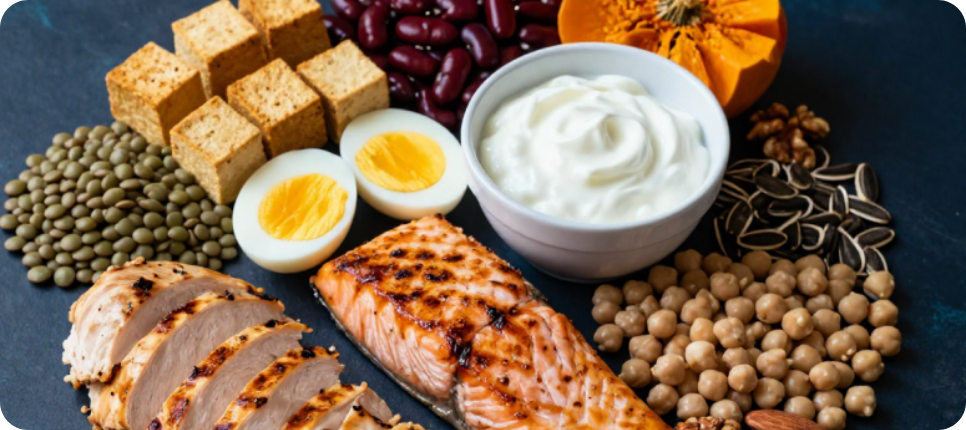
Firstly what is protein? Protein is a nutrient that acts like the building material for your body. Think of your body as a house, protein = the bricks that build and repair your house. It helps build muscles, skin, hair, nails, and bones.
Protein intake stimulates Muscle Protein Synthesis (MPS), driving the repair and growth of muscle tissue. Consistently activating MPS alongside weight training and a caloric surplus provides the necessary conditions for muscle growth.
Protein synthesis isn’t just about building new muscle tissue—it also helps your body maintain and preserve the muscle you already have. This makes getting enough protein particularly important when dieting, as you want to lose fat while holding on to as much muscle as possible. Protein is also the most satiating macronutrient, meaning it helps you feel fuller for longer. This can make it easier to manage hunger and stick to your calorie deficit, making your fat-loss journey much more sustainable.
If you ask 3 different people what a high protein diet looks like you will get different opinions, this is because there has been different variations of the same theme over the years. Some think eating mostly meat and not much else is a high protein diet, some think eating 40% of daily calories in protein is a high protein diet, and to some a high protein diet means you multiply your bodyweight in kilos by 4 and eat that many grams. Opinions vary, but the literature is relatively constant. According to much of the research, a healthy, young and active person who regularly participates in resistance training may benefit from around 2–3g of protein per kilogram of bodyweight, depending on their goals and body composition.
Whether this would be considered a “high-protein diet” depends on who you ask. What matters most, however, is that your diet provides enough protein to meet your individual needs. Ultimately, your protein intake should reflect your goals, body composition and overall diet. And while there’s little benefit to consuming far more protein than you need, slightly exceeding your target isn’t likely to cause harm in an otherwise healthy person.
The only time when a high protein intake would realistically cause problems is if it was to lead to an imbalanced diet. This could be a lack of carbohydrates or fats, or indeed of fibre and micronutrients if an excessively high protein intake was limiting the intake of these other foods in some way (either driven by appetite or by caloric balancing). Eating so much protein that you can’t eat enough calories because you’re too full, or eating so much protein that your gym performance sucks due to a lack of carbs isn’t a good idea.
Caloric balance remains the primary factor in weight management; consuming an excess of calories, regardless of the source, leads to fat gain. Whether a high-protein diet is necessary depends on how the term is defined. However, a daily intake of 2–3g per kilogram of body weight provides significant advantages and serves as a strong recommendation.